"Cognitive-behavioral therapy, a widely practiced integrative therapy, aims not only to alter the way people think (cognitive therapy), but also to alter the way the act (behavior therapy). It seeks to make people aware of their irrational negative thinking, to replace it with new ways of thinking, and to practice the more positive approach in everyday settings. Behavioral change is typically addressed first, followed by sessions on cognitive change; the therapy concludes with a focus on maintaining both and preventing relapses... 'The trouble with most therapy is that it helps you to feel better. But you don't get better. You have to back it up with action, action, action.' (Therapist Albert Ellis (1913-2007)." -- Page 687
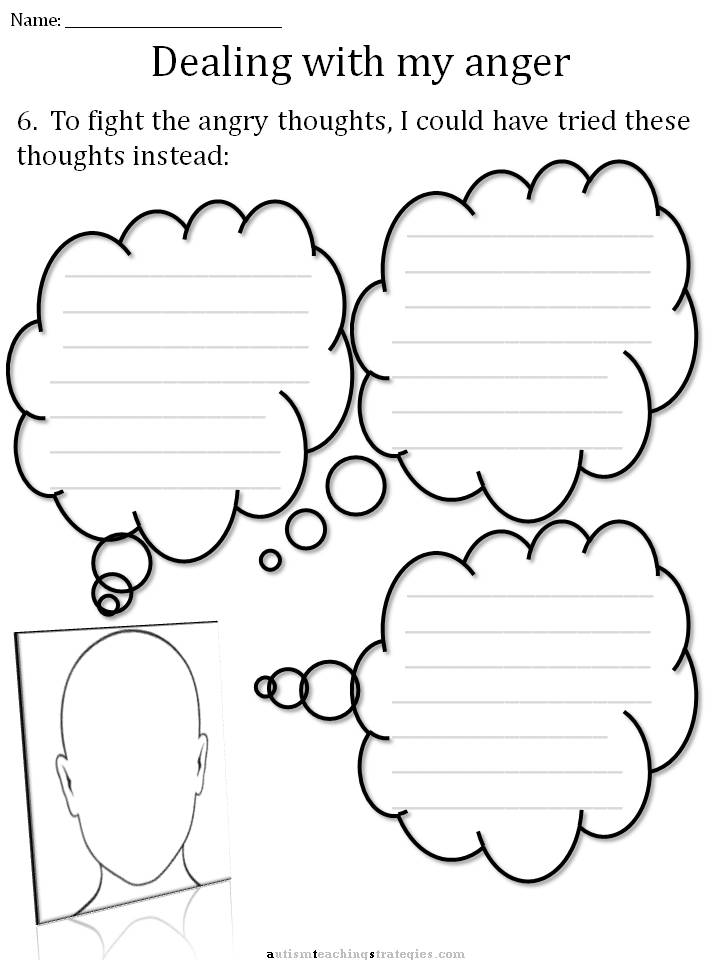
Cognitive-behavioral therapy can be useful for any age group. This worksheet was pulled from a children's workbook for cognitive-behavioral therapy, and aims to get the child to rethink alternative ways to react instead of the initial negative, angry thoughts they have been comfortable initially reacting with. While it seems childish, the therapy can work... I, personally, have not ever gone through this type of therapy. However, I've somehow gained the ability to alter the way I both think and act in the last week, alone. Something internally shifted, and suddenly I find myself extremely self-aware of the way I'm thinking, purposefully working to think more positive thoughts and see the bright side of things. With this new mentality, although difficult at times, I find myself more ambitious, more productive, and more enjoyable to be around by others. This change in me has sparked a chain reaction in my interactions with my immediate family, and most especially, my boyfriend. It creates a more positive outlook on life, and prevents a lot of fights that result from literally the most minute of aspects.

No comments:
Post a Comment